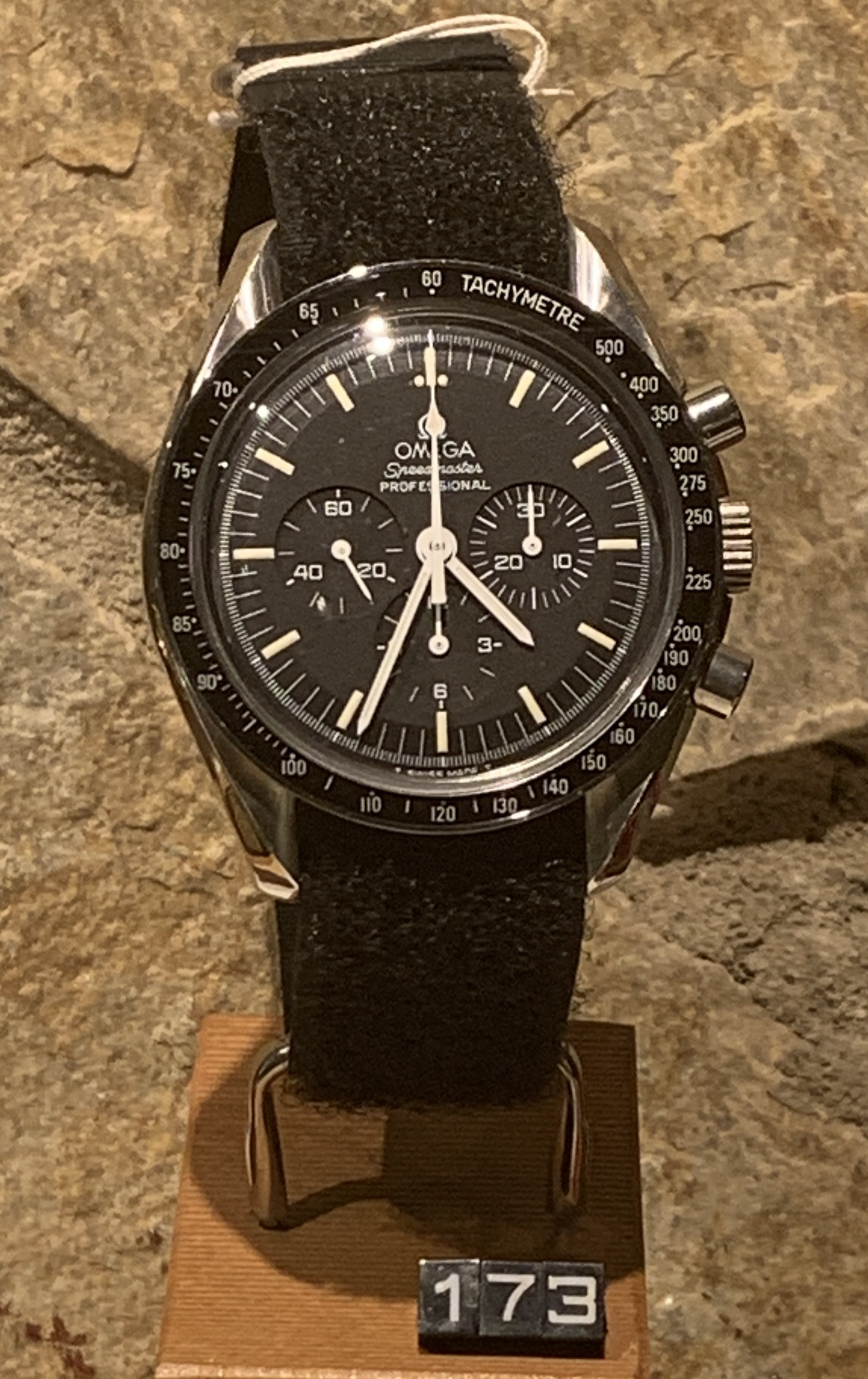
The origin story of the Moonwatch is so perfectly dramatic that it sounds manufactured. In 1964, NASA needed a chronograph for its Gemini and Apollo missions. They didn't call Omega directly — they bought several watches off the shelf from a Houston jewelry store. Rolex, Longines, and Omega were all in the running. After a punishing series of tests involving extreme temperatures, humidity, vibration, shock, and vacuum conditions, only the Speedmaster survived intact.
Let that settle for a moment. The watch that went to the moon was not chosen through a sponsorship deal. It was chosen because it refused to break. That distinction is the backbone of the Speedmaster's enduring credibility. In a world drowning in influencer partnerships and brand ambassador contracts, the Moonwatch earned its name the hard way.
Reference ST 105.012
The specific watch that Aldrin wore on the lunar surface was a reference ST 105.012 — a hand-wound chronograph powered by Omega's caliber 321, a column-wheel movement based on a Lemania design from the late 1940s. The 321 is legendary among movement aficionados for its architecture and finishing. When Omega reintroduced it in 2019, painstakingly recreated from original blueprints and CT scans of vintage movements, collectors lost their composure.
The Speedmaster was flight-qualified by NASA, not because Omega lobbied for it, but because it was the last watch standing after every other candidate failed.
Apollo 13 adds another chapter. When the spacecraft's electrical systems were shut down to conserve power, astronaut Jack Swigert used his Speedmaster to time the critical 14-second engine burn that corrected their trajectory for reentry. The watch was not an accessory on that mission — it was a survival instrument. Omega later received NASA's Snoopy Award for the Speedmaster's role in bringing the crew home safely.
The Current Landscape
Today's Speedmaster Professional Moonwatch, reference 310.30.42.50.01.001, carries the co-axial Master Chronometer caliber 3861 — a thoroughly modern movement wrapped in a case that still reads as mid-century. The hesalite crystal remains an option for purists, even as sapphire versions are available. The stepped dial, the dot-over-ninety bezel, the asymmetric case — these details matter to people who care about this watch, and there are very many such people.
The MoonSwatch collaboration with Swatch polarized the community in 2022. Some saw it as brilliant democratization. Others saw it as brand dilution. Both perspectives have merit. What the MoonSwatch did, undeniably, was introduce the Speedmaster silhouette to millions of people who had never considered a mechanical watch. Whether that translates to future collectors or merely generates hype is a question the next decade will answer.
Strip away the lunar mythology, the NASA connection, the Hollywood appearances, and what remains is a chronograph of exceptional clarity. The three-register layout is textbook legible. The tachymeter scale works exactly as a tachymeter should. The hand-wound movement invites daily ritual. The Speedmaster would be a significant watch even if it had never left Earth. That it did is simply the greatest marketing story ever told — because it was never marketing at all.